
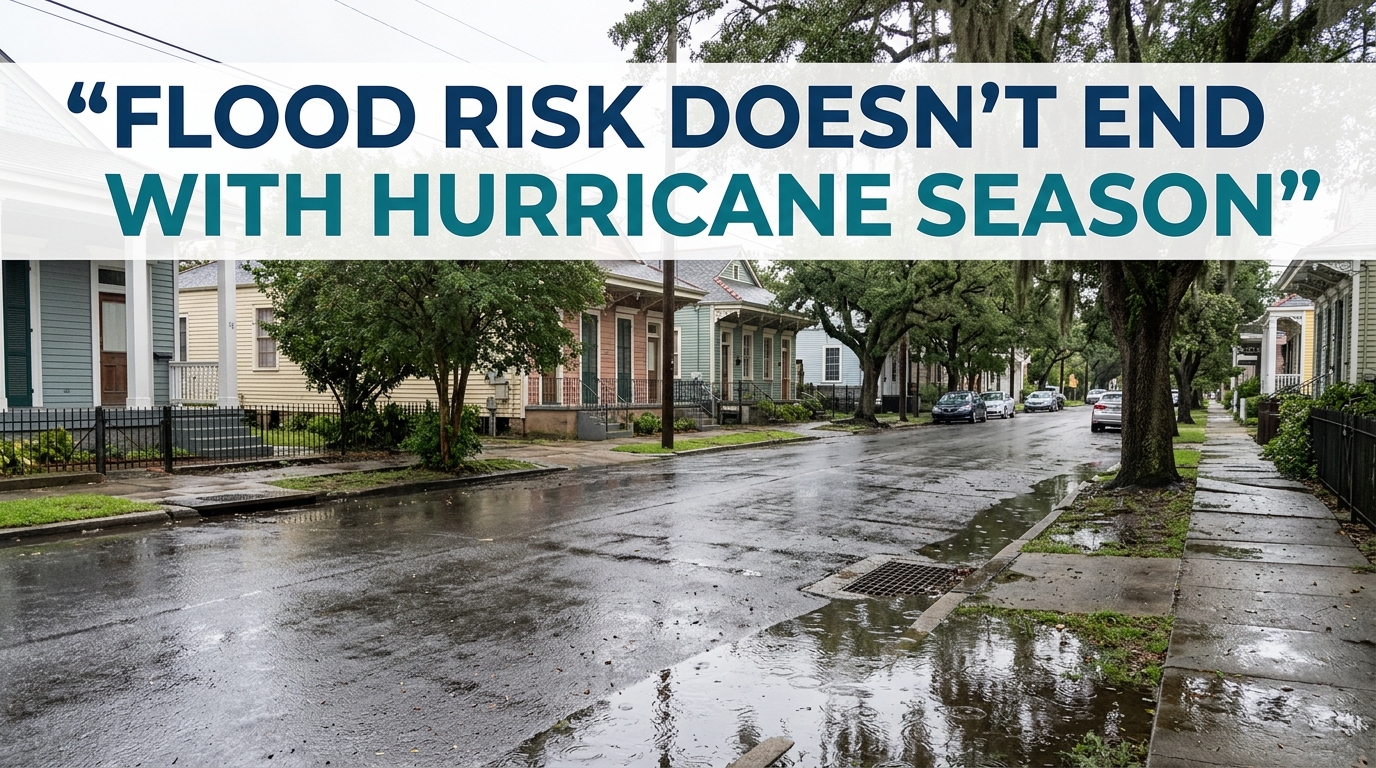
Why New Orleans Flood Risk Does Not End With Hurricane Season
Flood risk in Harvey and the greater New Orleans area does not wait for a named storm. A slow-moving rain system, overwhelmed drainage, high water levels, or changing ground conditions can all turn an ordinary forecast into a costly water event. That is why it is worth reviewing flood coverage before rain is on the radar—not only during peak hurricane season.
At The Insurance Center, we help local homeowners understand how a dedicated flood policy may fit alongside their home insurance. The right time to ask questions is before you need to file a claim, when you have time to compare options, review limits, and make an informed decision.
Heavy Rain Can Create Its Own Flood Threat
Hurricanes receive understandable attention in Southeast Louisiana, but they are not the only source of flooding. Intense thunderstorms can drop significant rainfall in a short period of time. When water accumulates faster than streets, ditches, pumps, and drainage systems can move it away, it may enter yards, garages, driveways, and homes.
Localized flooding can be especially frustrating because conditions may vary block by block. One neighborhood may see standing water after a downpour while another nearby remains mostly dry. Low-lying areas, drainage backups, saturated soil, and debris around drains can all influence how water moves after a storm.
For many households seeking Flood Insurance in New Orleans, the question is not simply whether they live near a canal, bayou, or lake. It is whether a severe rainfall event could create damaging water conditions around their property.
Drainage Conditions Change From One Storm to the Next
Our local drainage infrastructure works hard, but weather and site conditions can change quickly. A drain that handled a previous storm may be affected by leaves, debris, construction activity, tide levels, prolonged rain, or a system already working at capacity. Even small changes in where water collects can affect a property’s exposure.
That is why past experience is helpful but not a guarantee of what may happen in the future. “We have never flooded before” is an understandable perspective, yet it may not account for a stronger storm, a different rainfall pattern, or evolving conditions in the surrounding area.
Our Insurance Center team encourages clients throughout Harvey and greater New Orleans to revisit their protection periodically. A coverage review can help you understand whether your current approach still matches your home, location, and comfort level with risk.
Homeowners Insurance and Flood Coverage Serve Different Roles
Home insurance can be an important part of protecting a house, but it commonly treats flood-related water damage differently from other types of covered losses. In many situations, homeowners insurance does not take the place of a separate flood policy. Policy wording, causes of loss, exclusions, deductibles, and endorsements matter, so it is important to review your own coverage documents carefully.
A dedicated flood policy is designed to address certain losses caused by flooding, subject to its terms, limits, exclusions, and deductibles. It may be available through the National Flood Insurance Program or private insurers, depending on the property and available options. We can help explain the differences so you are not left assuming one policy automatically covers what another policy addresses.
When reviewing Home Insurance in New Orleans, it is wise to ask a direct question: “How would my policy respond if rising or accumulating water damaged my home?” A conversation now can make the distinction much clearer.
Start With Your Flood Zone and Elevation Information
Your flood zone is a useful starting point, but it is not the whole story. Flood maps can help identify mapped flood hazards and may affect lender requirements, yet properties outside higher-risk zones can still experience flooding. Elevation information, the home’s foundation, nearby drainage paths, and local water history can add valuable context.
Gather what you can before requesting a review. That may include your current declarations pages, mortgage requirements, flood zone details, an elevation certificate if one is available, and information about improvements made to the property. We can use those details to guide a more productive conversation about Flood Insurance in New Orleans.
If you own or operate a company locally, the same kind of review can be valuable for commercial property. Business Insurance in Louisiana may involve different property, income, and operational considerations, so it is important to discuss the specific risks facing your location.
Look Closely at Deductibles and Policy Limits
Choosing a policy is about more than deciding whether to have coverage. Deductibles and limits affect how a claim may work and how much financial responsibility you may retain after a covered loss. A lower premium may come with a higher deductible, lower limits, or different terms than another option.
Ask how the policy addresses the structure and your personal belongings. Confirm whether the coverage amounts reflect current rebuilding costs and the value of the items you would need to replace. Also ask about exclusions and any special limits that could apply to certain property or areas of the home.
Our advisors do not believe in one-size-fits-all recommendations. The Insurance Center takes time to discuss your priorities, explain available coverage choices, and help you compare coverage quotes in the New Orleans area with greater confidence.
Create a Simple Home Inventory Before You Need It
Documenting your belongings is one of the most practical preparations you can make. Walk through each room with your phone and take photos or video of furniture, appliances, electronics, tools, clothing, and other valuables. Include serial numbers, receipts, and appraisals when possible.
Store the inventory somewhere you can access away from home, such as secure cloud storage or an email folder. Update it after major purchases, renovations, or life changes. This record can support conversations about appropriate personal-property limits and may be useful if you ever need to report a loss.
Ask About Waiting Periods Before Rain Is Forecast
Flood coverage may not become effective immediately after you purchase it. Waiting periods can apply, although exceptions may exist in certain circumstances. The timing depends on the policy and situation, which is why it is important to ask about it early rather than waiting until a storm system is approaching.
When heavy rain is in the forecast, insurance options can become more limited or subject to binding restrictions. Reviewing your coverage on a clear day gives you more time to understand choices and avoid last-minute pressure.
Why a Local Conversation Matters
Insurance agents in the New Orleans area understand that flood concerns are shaped by local realities: fast-moving downpours, drainage patterns, changing property conditions, and the uncertainty of Gulf weather. At The Insurance Center, we bring that local perspective to every conversation while keeping the focus on your individual needs.
We serve homeowners and businesses in Harvey and throughout greater New Orleans with auto, home, business, and flood insurance options. Whether you are reviewing an existing policy, buying a home, updating coverage after improvements, or simply looking for clearer answers, we are here to help.
FAQ
Can a home outside a high-risk flood zone still flood?
Yes. Flood maps identify certain areas of flood hazard, but heavy rain, drainage issues, and changing local conditions can affect properties in many locations. Reviewing your property’s specific information can help you make a more informed coverage decision.
Does homeowners insurance automatically cover flood damage?
Homeowners policies often handle flood-related damage differently from other water losses and may not replace a dedicated flood policy. Coverage depends on the policy language, cause of loss, exclusions, and endorsements. We can help you review your current policies and discuss available flood coverage options.
What information should I have ready for a flood insurance review?
Bring your current insurance declarations pages, property address, flood zone information, elevation certificate if available, mortgage requirements, and details about prior flooding or property improvements. These details can help us provide a more useful review.
How do deductibles and limits affect a flood policy?
Your deductible is generally the amount you may pay out of pocket before covered benefits apply, while limits represent the maximum amount available for covered losses under the policy. The specific terms vary, so we will help you review how different options may fit your budget and protection goals.
When should I ask about a flood policy?
Ask as soon as possible—well before a significant rain event or tropical system is expected. Waiting periods and binding restrictions may apply, and an early conversation gives you more time to consider your options.
Do not wait for hurricane season to think about water risk. Call The Insurance Center at (504) 367-8555 today for a flood coverage quote or a review of your current protection in Harvey and the greater New Orleans area.